Nakatanidou in Nara: Japan’s Fastest Hand-Pounded Mochi
- The Introvert Traveler
- 27 set 2024
- Tempo di lettura: 5 min

Aggiornamento: 4 giorni fa
Type of cuisine: mochi
Last visit: December 2023
My rating: 10/10
Address: 29 Hashimotocho, Nara, 630-8217, Japan
Price: €/€€€€€

Nakatanidou Mochi Shop in Nara
Nakatanidou is a must-visit destination in Nara, Japan, renowned for its freshly made mochi, a traditional Japanese rice cake.
This small shop, located near Nara Park, offers a delightful and immersive experience for both locals and tourists alike. What makes Nakatanidou truly stand out is not just the quality of its mochi, but the mesmerizing mochi-pounding demonstration that takes place right in front of the shop.
The place is easy to identify: it is the one surrounded by a small crowd intent on taking photos with their cell phones, while a zealous employee compresses it to prevent some customers from being overwhelmed by the traffic before having consumed.
What is Mochi?
Before talking about Nakatanidou, it is worth understanding what mochi actually is.
Mochi is a traditional Japanese rice cake made from glutinous rice that is steamed and then pounded into a smooth, elastic paste. The dough is then shaped into small cakes that can be eaten plain or filled with sweet red bean paste.
Although mochi can be found throughout Japan, it is particularly associated with seasonal celebrations and traditional sweets known as wagashi.
Its distinctive texture, soft, stretchy and slightly chewy, comes from the pounding process that transforms the rice into a sticky dough.
Yomogi Mochi: the Specialty of Nakatanidou
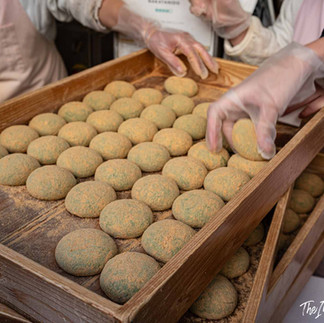
The signature product of Nakatanidou is yomogi mochi.
Yomogi is a type of Japanese mugwort that gives the rice cake its distinctive green color and a slightly herbal flavor. Inside the soft mochi is a filling of sweet red bean paste (anko).
The combination of freshly pounded rice and the aromatic yomogi produces a flavor that is both delicate and deeply traditional.
Freshly made mochi is incredibly soft, almost melting in the mouth when eaten immediately after preparation.
The process of mochi pounding: mochitsuki
The process of making mochi, called "mochitsuki", involves pounding steamed glutinous rice into a sticky, smooth dough. At Nakatanidou, this age-old tradition is turned into an almost theatrical performance. Using large wooden mallets, the staff work in perfect sync to pound the rice dough in rapid succession, with a skill and speed that is astonishing. This display draws crowds who are captivated by the precise coordination and the effort that goes into making each piece of mochi. What’s even more impressive is that Nakatanidou holds a Guinness World Record for its mochi-pounding speed.
Famous Mochi in Nara: Why Nakatanidou Stands Out
Beyond the performance, the mochi itself is a culinary delight. Nakatanidou is particularly famous for its yomogi mochi, a variation flavored with Japanese mugwort, which gives the treat a subtle earthy and herbal taste. Inside, the mochi is filled with smooth and sweet red bean paste (anko), providing a perfect balance between the chewy outer layer and the creamy filling. The freshness of the mochi is unmatched; it's made in small batches throughout the day, ensuring that customers always receive a soft, warm, and incredibly flavorful snack.
The texture of the mochi is one of the highlights of this experience. Mochi from Nakatanidou is pillowy and soft, but also pleasantly stretchy, making it a delight to bite into. The red bean paste, often a staple in many Japanese confections, is not overly sweet, allowing the natural flavors of both the mochi and the filling to shine through. Combined with the slight bitterness of the yomogi, this creates a complex yet comforting flavor profile.
Eating fresh mochi, just made, is an extraordinary experience for a food enthusiast; Nakatanidou mochi do not fall into the trap of overdoing it with sugar and at Nakatanidou they excel in the all-Japanese virtue of finding the perfect balance between sweet and salty; the texture of the freshly made mochi, in the mouth, is persuasive: it is soft without being rubbery, stringy, deliquescent. Even the temperature is particular: the mochi is not cooked, but even on a cold winter day it is vaguely warm (I assume this is due to the stresses received by the dough during processing, no less than those suffered by a man during an entire Sunday spent at Ikea with his partner), which contributes to the sensorial experience, making eating it on the spot even more indispensable.
In terms of ambiance, Nakatanidou itself is a modest, no-frills shop, with the focus squarely on the mochi-making process and the product. There's limited seating, but many visitors prefer to enjoy their mochi standing outside, savoring the treat while taking in the vibrant atmosphere of the area. The shop is situated conveniently close to Nara Park, where visitors can feed the friendly deer and explore the surrounding temples, making Nakatanidou a perfect stop during a day of sightseeing.
Prices at Nakatanidou are incredibly reasonable, especially given the quality and the experience. For just a few hundred yen, you can enjoy a fresh mochi that is leagues above what you might find elsewhere in Japan.
Overall, Nakatanidou offers more than just a snack: it provides an authentic and memorable cultural experience. Whether you're a fan of Japanese sweets or simply curious about traditional food-making practices, a visit to Nakatanidou should be high on your list when in Nara. The combination of performance, tradition, and taste makes it a highlight of any trip to this historic city.
Beyond Street Food: Mochi and the World of Wagashi in Nara (Japan)
Mochi are not simply a street snack or a culinary curiosity to be consumed while standing in line with a smartphone in hand. They belong to the broader and far more complex world of wagashi, traditional Japanese confections whose function has historically been aesthetic, symbolic, and seasonal rather than merely alimentary. Wagashi developed in close dialogue with the tea ceremony, where sweetness is deliberately restrained and texture matters as much as flavor, serving to prepare the palate for bitter matcha. Mochi, made from glutinous rice pounded into a dense and elastic mass, represent one of the most ancient foundations of this tradition, deeply tied to agricultural cycles, ritual offerings, and New Year celebrations. What distinguishes wagashi from Western pastry is not technical virtuosity or excess, but a disciplined minimalism: ingredients are few, gestures are precise, and every element — shape, color, softness — is meant to evoke a season, a plant, or a fleeting moment in nature. In this context, the spectacle at Nakatanidō, often reduced by visitors to a form of culinary entertainment, can be read instead as the survival of a physical, almost ritual gesture. The violent rhythm of pounding rice is not performance for tourists, but the visible trace of a tradition in which food, time, and manual labor remain inseparable.
If you are interested in the world of wagashi beyond its most superficial or touristic representations, the following books offer a solid and well-documented introduction. They approach Japanese sweets not as curiosities, but as cultural objects shaped by ritual, seasonality, and restraint:
Wagashi, by Mutsuo Takahashi; a visually refined and culturally informed book that treats wagashi as aesthetic and seasonal objects rather than mere desserts. Particularly useful to understand how form, color, and restraint play a central role in traditional Japanese sweets.
Tanoshii Wagashi: Little Bites of Japanese Delights, by Yamashita Masataka; An accessible introduction to the world of wagashi, written for an international audience. Clear explanations and a broad overview make it a good starting point for readers curious about Japanese sweets without a technical background.
If you are planning a trip to Japan, you may be interested in these posts.