
The Charm of Fish Markets: Exploring the Heart of Coastal Cities
- The Introvert Traveler
- 7 dic 2024
- Tempo di lettura: 9 min

Aggiornamento: 4 giorni fa
Fish markets are vibrant places, rich in history and life, where the unceasing flow of human activity meets the natural rhythm of the sea. Here, traditions, culture, economy, and daily life intertwine seamlessly. These spaces are more than simple hubs of economic exchange: they represent the boundary between land and sea, a symbolic and tangible threshold that bears witness to humanity’s millennia-old relationship with the ocean.
At first glance, what strikes you in fish markets is the kaleidoscope of colors: the silvery blue of anchovies, the vivid red of langoustines, the pearly white of open shells, and the shiny gray of freshly caught squid. The strong, penetrating scent of the sea pervades every corner, mingling with the briny, earthy notes of seaweed washed ashore. This aroma, pungent to some, is an ancestral call, evoking distant voyages and boundless seas.
Here, a unique transition takes place: what belongs to the sea becomes part of the land. It is a permeable boundary where the lives of seafarers intertwine with marine life. Crates brimming with fish seem to narrate tales of deep-sea floors, nets cast into the abyss, waves lashing against boats, and men braving the elements on a planetary scale to draw sustenance from the sea—reenacting a ritual that has endured for millennia.
Once laid out on the stalls, the crates of fish leave behind the adventure of the catch and give rise to the theatre of commerce: customers curiously examining the various species on offer in search of the freshest catch; vendors, with seasoned expertise, skillfully promoting even the less appealing products; children looking on with disgust at some slimy, malodorous invertebrate that will soon appear on their dinner plates.
For a traveler, these markets are not just places to buy fresh ingredients but windows into the lives of those who coexist symbiotically with the sea. Among the stalls of fish, crustaceans, and shellfish, you breathe in the authentic essence of the city, a mix of unmistakable scents, colors, and sounds. In this post, I’ll take you on a journey to some of the most beautiful fish markets I’ve visited around the world, sharing their colors, smells, and flavors.
Fish Markets as Economic Theatres
Beyond their colours and smells, fish markets are above all economic institutions. Every stall represents the end point of a complex chain that begins at sea, passes through harbours, auction halls and wholesalers, and finally reaches the hands of fishmongers and cooks. In many coastal cities the early-morning auction remains the most dramatic moment of the day. Boxes of freshly landed fish are displayed, assessed, bargained over and rapidly redistributed across restaurants, markets and processing plants. This ritualised choreography reveals the invisible infrastructure that sustains maritime economies: fishermen negotiating uncertain catches, traders calculating margins, chefs searching for the finest specimens of the day. Seen from this perspective, the fish market becomes a stage on which the economic life of the coast unfolds in real time, a place where the rhythms of the sea directly shape the rhythms of the city.
Fish Markets as Archives of Marine Biodiversity
A walk through a fish market can also be read as a condensed catalogue of the surrounding marine ecosystem. The species displayed on the stalls are not random: they mirror the ecological conditions of the waters nearby, the seasonal migrations of fish, and the techniques used by local fishermen. Mediterranean markets offer trays of sardines, anchovies, sea bream and octopus; Atlantic ports may display cod, monkfish and oysters; Japanese markets present an astonishing variety of tuna, shellfish and reef species. For anyone interested in marine life, a fish market functions almost like a natural history museum, except that its exhibits change daily. The diversity—or sometimes the scarcity—of species on sale quietly reflects broader environmental realities, from healthy fisheries to the pressures of overfishing and climate change.
Fish Markets as Culinary Anthropology
Fish markets are also places where culinary cultures become visible. The way fish is cut, presented and valued tells a great deal about how a society eats. In Mediterranean markets whole fish are often displayed with pride, destined for simple preparations such as grilling or roasting with olive oil and herbs. In Japan the emphasis falls on precision cuts suited to sashimi and sushi, revealing a culinary tradition that treats seafood with almost surgical care. Elsewhere, shellfish may dominate, reflecting local tastes and historical trade routes. Observing these practices turns a visit to a fish market into a lesson in culinary anthropology: a reminder that behind every species on the counter lies a web of habits, recipes and traditions shaped over centuries by geography, climate and culture.
When I travel around the world, I always try, if time allows, to spend a few hours at the local fish market, precisely to appreciate its role as a borderland between terrestrial life and the marine world, interpreted through the lens of local culture. This post is periodically updated whenever I visit new markets.
Piscaria in Catania: The Ordered Chaos of Sicily
The Piscaria in Catania, located in the heart of the historic center, is one of the city’s most captivating attractions. Though it may not be as renowned as the famous Vucciria or Ballarò markets in Palermo, the Piscaria is undoubtedly the most authentic representation of a Sicilian fish market. Nestled between a few stalls near the Amenano Fountain and the railway bridge, the Piscaria is a genuine neighborhood market where, amidst tuna steaks, swordfish, and shouts in the local dialect, you can breathe in the quintessence of Sicilian culture and its deep connection to food and the sea.
The Piscaria is a must-visit for anyone traveling to Catania and looking to savor the typical seafood delicacies of Sicilian cuisine, starting with tuna and swordfish, which are plentiful in the fishing areas off Catania’s coast.



Mazara del Vallo Market (Sicily)
Mazara del Vallo (south west of Sicily) is a name that, in Italy, instantly brings to mind the exquisite red prawns often served raw in seafood restaurants across the country.
Among all the markets mentioned in this post, this is undoubtedly the smallest. The Mazara del Vallo market is not even a proper market but rather a temporary setup arranged as fishing boats dock, allowing for the quick sale of the day’s catch.
Despite its modest means, the market offers the picturesque spectacle of seafaring men, weathered by their labor in the turbulent Mediterranean, auctioning off the finest catches of the day. The bidding process unfolds in a whirlwind of offers spoken in dialect, creating a syncopated rhythm that resembles a lively ragtime performance.
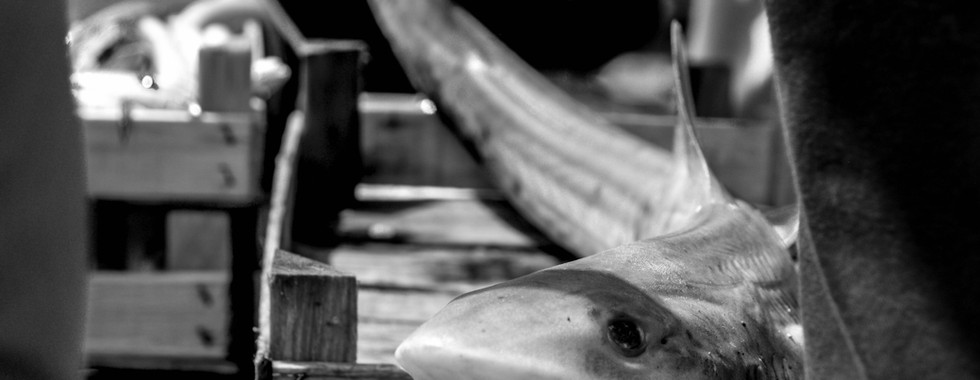
This market is also, among all those I have visited, the stage for a drama that unfolds every day with increasing inevitability, as my photographs show: the indiscriminate hunting of sharks, which is gradually depriving the Mediterranean of these magnificent animals that are essential to the marine ecosystem.








San Benedetto Market in Cagliari: The Order and Variety of Sardinia
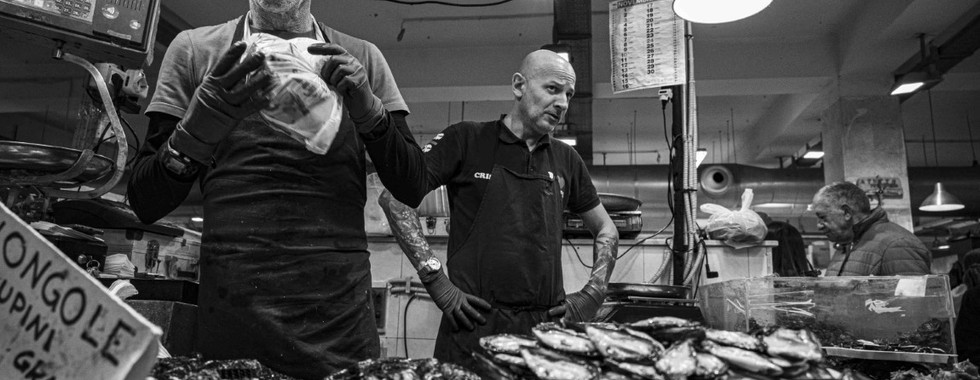
In Cagliari, the San Benedetto Market is a true institution. This covered market is the largest in Europe and serves as a reference point for both locals and tourists seeking the freshest products.
Unlike the Piscaria in Catania, whose open-air location nestled among historic buildings adds to its picturesque charm, the San Benedetto Market, housed within an unremarkable commercial building, may lack visual allure but compensates with its culinary abundance. While the Piscaria thrives on organized chaos, the San Benedetto Market stands out for its neat, clean layout. The fish section, located on the lower floor, features well-organized stalls offering an incredible variety of seafood.
Here, you’ll find an abundance of Mediterranean staples like sea bream, sea bass, octopus, and squid. But what sets this market apart, and what will surely delight food lovers, are the unique specialties of Sardinia: mullet bottarga, tuna from Carloforte, oysters from San Teodoro, mussels from Sant'Antioco (delicious when sampled raw, straight from the fishmonger’s hand), eels from Cabras, orziadas (sea anemones), sea urchins, and lobsters from Alghero.
On Saturday mornings, the entire city of Cagliari converges on the San Benedetto Market, creating a lively scene of fish trading. While the market may lack the charm of its setting, it more than makes up for it with the vibrancy of its characters and the exceptional quality of its seafood.










Rialto Market (Venice, Italy): Venetian Tradition and Historic Charm
If Cagliari’s San Benedetto Market compensates for its lack of charm with an overwhelming culinary offering, the same cannot be said for the Rialto Market.
Located in the heart of Venice, the Rialto Market is a symbol of history and tradition. Nestled near the iconic Rialto Bridge and sheltered under ancient arches, this market is where the Venetian lagoon meets the palate of its visitors, and its setting could not be more captivating.
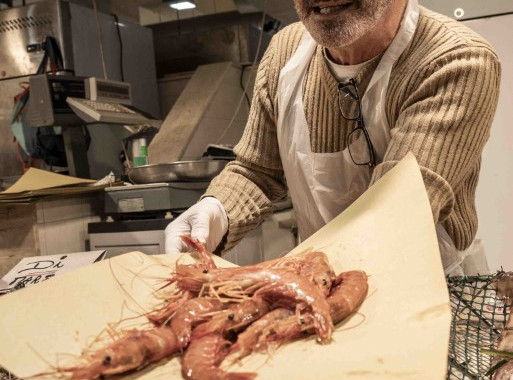
The Rialto Market is among the oldest in Italy, with origins dating back to the 11th century. Strolling among the stalls, you can sense the historical legacy of a place that served as a hub of maritime trade for centuries. To this day, Venetians come here to purchase fresh fish, such as sea bass, cuttlefish, moeche (soft-shelled crabs), and lagoon prawns.
For travelers, the Rialto Market is a feast for the eyes. The historic architecture, the gondolas gliding slowly through the nearby canals, and the vibrant stalls offer endless photographic opportunities. Moreover, its proximity to bacari (small Venetian bars) makes this market the perfect starting point for a day dedicated to exploring local cuisine.
Naturally, the market offers the essential ingredients for Venice’s traditional seafood dishes, some of which are prepared and sold by fishmongers right behind the market: sarde in saor (sweet and sour sardines), polenta with schie (small shrimp), stockfish, baccalà, cuttlefish, and, in season, the exceptional moeche (if you'd like to eat moeche you may want to read my review of the Antiche Carampane restaurant in Venice).
It’s hard to find another market in the world that rivals Rialto in both charm and the quality of its local cuisine.







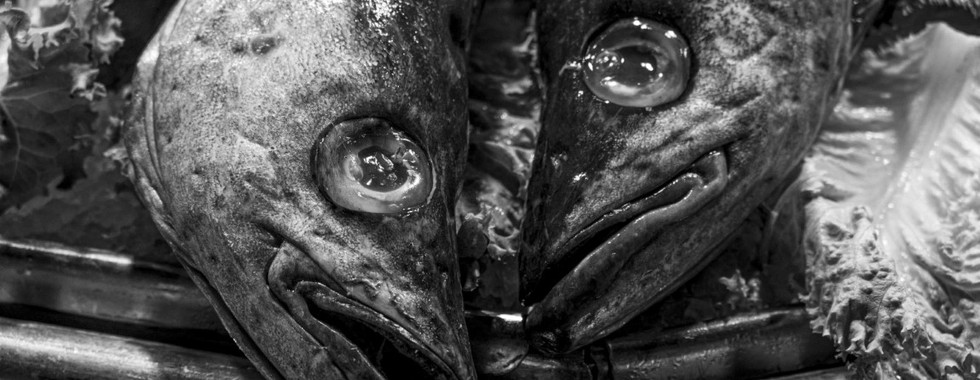


Tsukiji: The Soul of Maritime Japan
The Tsukiji Market in Tokyo, though no longer the site of the famous tuna auctions, remains a place where the word "iconic" is far from overused.
For decades, Tsukiji was the largest fish market in the world and a cornerstone of Japanese cuisine. Today, the outer market is still bustling with stalls and restaurants offering the freshest specialties. From sushi and sashimi to king crab, visitors can savor some of the finest culinary delights on the planet and gain a deeper understanding of Japan’s profound connection to the sea.
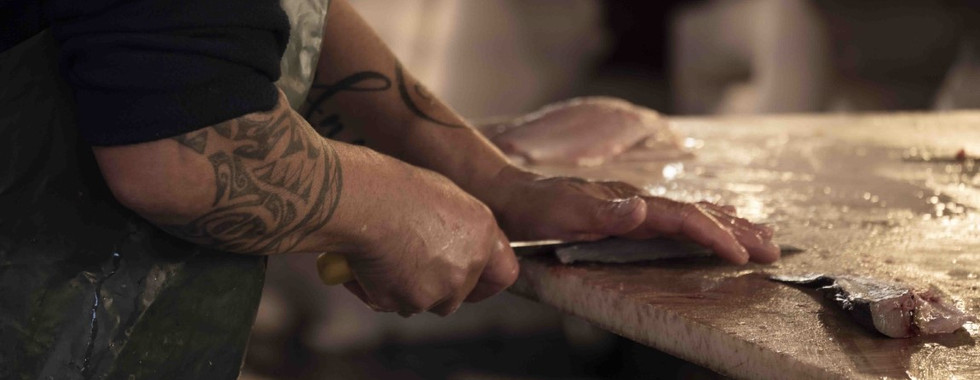
Compared to Italian markets, Tsukiji stands out not only for its immense size but also for the undeniable exoticism of its products and rituals. The care with which each item is prepared and displayed reflects the Japanese aesthetic, where attention to detail is paramount. Here, the market experience becomes a cultural journey, offering insight into the sea’s central role in Japanese life and spirituality.











Cancale (Brittany): The Oyster Market
Nestled on the Atlantic Ocean in a small bay overlooking the abbey of Mont Saint Michel, the quaint port town of Cancale is a hidden gem, often overlooked as a tourist destination—a pity, as Cancale boasts a charm matched by few other Breton villages. However, Cancale is undeniably famous for its oyster production, which forms the backbone of its local economy. And what better symbol of humanity's relationship with the sea than this precious mollusk, living its life at the boundary between land and water, periodically exposed and reclaimed by the ocean’s tides?
A visit to the Cancale oyster market is an essential stop for anyone who loves seafood and wants to immerse themselves in the history of a town that has thrived for centuries on its connection to the sea and the bounty it provides. Here, one can not only savor fresh oysters directly by the shore but also gain a deeper appreciation for the symbiotic relationship between this small community and the ocean.


The Fish Market of Mafia Island (Tanzania): A Return to Humanity’s Origins with the Sea
After visiting markets where fish trade has become a luxury affair for wealthy tourists and top-tier chefs, we now journey to a place where fishing remains as it was in humanity's earliest days: an adventure, a life-or-death confrontation with the ocean’s might to fulfill the most basic needs of survival.
Although Tanzania is not among Africa’s poorest countries, it still struggles with widespread poverty and underdevelopment, even amid the economic benefits brought by intensive tourism. This is especially true for Mafia Island, which, despite recent growth in tourism, remains far less visited than its neighbor, Zanzibar.
On Mafia Island, the fish market is located along its western coast. Here, local fishermen, maintaining a near-symbiotic relationship with the island’s population of whale sharks, set out every morning in antiquated wooden boats to hunt massive schools of small pelagic fish. By morning, the local community gathers eagerly on the shore, awaiting the return of the fishing boats to purchase modest amounts of inexpensive fish to feed their families.
This is true subsistence fishing, evoking living conditions that, for Westerners, belong to a bygone era at least a century in the past. The role of technology is minimal—limited to the occasional small engine and some nylon for the nets. Nearly all the work is done by hand. Sanitary conditions are rudimentary, and to protect the fish laid out to dry in the sun from scavenging birds, a dying seagull chick is hung by one leg above the drying racks to deter other birds from approaching.
Despite its occasional harshness, the scene at the Mafia Island fish market encapsulates the essence of humanity’s relationship with the sea. It’s a snapshot of the way this bond was formed at the dawn of time, and how it continues to endure millennia later.





For travelers, fish markets are not merely places to buy fresh products—they are immersive cultural experiences. Through food, one can grasp the deep connection between a city and its surroundings, between the sea and those who live by it. Each market tells a unique story, offering a journey into the flavors and traditions that bind humanity to the ocean.
Whether it’s the chaos of Catania’s Piscaria, the orderliness of San Benedetto in Cagliari, the history of Rialto, or the sophistication of Tsukiji, these markets provide an unmissable opportunity to discover the soul of coastal cities.